
VIP member

Microelectrode observation microscope
Microelectrode observation microscope
Product details
Microelectrode observation microscope
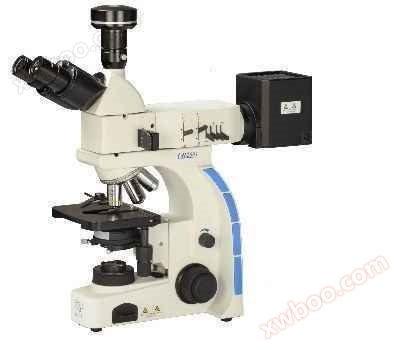
BMT-LV320 Upright Metallographic Microscope - Industrial Testing Product, Testing New Standard
Key points for selecting microelectrode observation microscopes:
1. For an infinite optical system, the objective lens must be a specialized lens for long working distances.
The magnification is 100-800 times
3 fine tuning grid values 1 micrometer
4-stage adjustable height
Electrode can be inserted in the middle of the 5-stage stage, and the device can be well fixed
The thickness measurement of the middle metal wire and glass is a basic experiment, and the observation at the top of the microelectrode requires four-color illumination of the reflected light to improve resolution.
The higher the resolution frame rate of the 7 digital acquisition devices, the better.


The BMT200 series metallographic microscope is used by multiple research institutions, including the Precision Department of Tsinghua University, the Institute of Microelectronics at Tsinghua University, the National Nanotechnology Center (Graphene Testing), the Institute of Process Science at the Chinese Academy of Sciences, Building 2 of Beijing Institute of Technology, the Institute of Semiconductors at the Chinese Academy of Sciences, and the Second Academy of Aerospace Science and Technology. Purchasing users can visit and inspect the units that have already been used.
Introduction to the application of metallographic microscope:
The transmission and reflection metallographic microscope is suitable for observing, studying, and analyzing small and difficult to invert samples, as well as for finding specific target samples within a certain range. The transmission reflection metallographic microscope is equipped with a falling light (coaxial reflection) and a transmission light, which can not only identify and analyze the microstructure of various metals, alloy materials, non-metallic substances, as well as the surface conditions of integrated circuits, microparticles, wires, fibers, surface coatings, etc., but also widely used in the electronics, chemical, and instrumentation industries to observe opaque and transparent substances. Such as metals, ceramics, integrated circuits, electronic chips, printed circuit boards, liquid crystal panels, films, powders, carbon powders, wires, fibers, coatings, and other non-metallic materials.
The BM200I upright reflective golden microscope is equipped with a falling light and transmission illumination system, an infinitely long distance flat field achromatic objective lens, and a high-resolution objective lens that completely eliminates chromatic aberration. It can ensure high-quality observation images with high structural contrast, clarity, and resolution. The large field eyepiece and polarized observation device have the characteristics of clear images, good contrast, beautiful appearance, and easy operation. It is suitable for small and inconvenient inverted samples, as well as observation research and analysis that need to find specific or wide range targets
The BM200i series upright metallographic microscope has the advantages of multiple accessories, wide performance, and the ability to perform bright field, dark field, and polarized observation. Paired with a three eye observation tube, it provides users with various image acquisition modes such as professional digital CCD and high-definition DV for digital photography, and can also provide professional metallographic analysis software modules according to user needs.
Technical parameters of BM series digital metallographic microscope:
1. Optical system: Infinite chromatic aberration independent correction optical system
2. Body: Integrated design, integral die-casting, more stable and sturdy body
3. Magnification: 40-1000X
4. Eyepiece: With anti mold function, flat field 10X high eye point eyepiece, field of view 20mm, high eye point observation, pupil distance 21mm, adjustable refractive power.
5. Objective lens: Infinite long working distance metallographic flat field objective lens (with anti mold function), 10X, 20X (with spring and buffer device)
50X (with spring and buffer device); 80X (with spring and buffer device), 100X (dry lens).
6. Twisted chain dual/triple vision: infinite distance, observation angle of 30 °, pupil distance of 52mm~75mm, adjustable visual acuity.
7. Mirror converter: internal positioning five hole conversion structure;
8. Coarse and micro focusing device: Low position coarse motion coaxial focusing handwheel; Micro adjustment handwheel 0.1mm/turn, grid value 0.001mm; the smaller the micro adjustment grid value, the clearer the focusing. Adjustable coarse elasticity, 14mm/rotation; The upper limit device of the workbench has a maximum stroke of 20mm; the position of the coarse and fine focusing handwheel can be adjusted up and down to meet the needs of different users.
9. Stage: 156mm × 138mm, equipped with a movable ruler, with a moving range of 76 × 54mm and an accuracy of 0.1mm; X and Y low position coaxial adjustment handwheel;
10. Lighting system: 12V50W halogen lamp reflective lighting, with continuously adjustable brightness. Optional 12V100W halogen lamp lighting.
11. Special handling handle.
12 digital imaging device: 3 million pixel digital CCD.
13 Analysis software: ImageAnalysisSystem11.0
Detailed Function Introduction of ImageAnalysisSyste11.0 Software:
ImageAnalysisSyste11.0 software has added multiple practical features, with a more user-friendly interface, powerful functionality, and convenient operation, and has good compatibility. In addition to providing basic functions such as capture, measurement, and calibration, it can also perform various image processing such as relief, color reversal, and mirroring on the collected images, as well as print graphic and textual report documents. It can also cut and export counting results from the images, which are widely used in fields such as biology, materials science, industrial testing, criminal investigation, and medical microscopy. Add new practical functions such as image stitching and fusion.
Image acquisition: Set parameters such as image size, acquisition format, image attributes, color, brightness, contrast, white balance, etc., and can take photos, record videos, and schedule photos and videos.
Image measurement: Measure the length, perimeter, and area of line segments, rectangles, irregular shapes, ellipses (circles), angles, and three-point circles, and export them in EXCEL format.
Image processing: In addition to dynamically adjusting brightness/contrast, chromaticity/saturation, and red/green/blue colors in real-time, it can also perform image processing functions such as color inversion, relief, sharpening, smoothing, graying, noise removal, rotation, flipping, and mirroring on images.
Annotation drawing: convenient and efficient text annotation, simple and vivid arrow indication, and various geometric shapes.
Image segmentation: Convenient and intuitive binary threshold adjustment, corrosion and expansion functions further accurately outline the contour of cell images. Select the "Cell Statistics" button to quickly count the number, circumference, and area of cells, and export the measured data.
Image stitching: When the microscope can only capture partial images of slices, arrange the obtained partial images in order, and then use this software for stitching to obtain the image of the entire slice.
Image fusion: When using slices with uneven thickness for observation, due to the limitation of the depth of field of the high-power objective lens, only clear local images can be observed. Images from different focal planes can be captured, and image fusion technology can be used to obtain a clear and complete entire image.
Grid plate counting: The counting grid can be displayed on the monitor, and the grid size can be freely customized by the user (corresponding to the actual size of the microscope), clearly observing and calculating the density and number of observed objects per unit area.
Graphic and textual report: The powerful graphic and textual report function helps you easily create report documents with both graphics and text.
ImageAnalysis 11.0 image processing software reserves an upgrade interface and offers lifelong free upgrades.
Advantages of digital upright metallographic microscope products:
1. Infinite optical system, internationally advanced optical system, integrated rack design, meeting ergonomic principles
2. Ordinary objective lens, ensuring greater clarity in the field of view, long working distance metallographic objective lens,
3. The aperture stop is equipped with an objective lens of the same color for easy operation,
4. Focusing mechanism: Fine tune the grid value to 1 micron for more precise positioning,
5. The focusing mechanism is adjustable in height to meet the needs of users with different hand shapes, reducing work intensity and providing a user-friendly design.
6. Advantageous heat dissipation device, optional LED lighting.
7. Reflected light is equipped with field and aperture stops to ensure clear imaging. There are 4 color filter selection modes to ensure the selection of observation light colors
8. Both transmission and reflection lighting are equipped with polarizing mirror detection mode,
9. Reflected light 50W illumination, 100W optional, expandable to meet the needs of high illumination brightness users.
10. All light source lightboxes adopt national technology heat dissipation lightboxes to ensure that the lightbox temperature is below 50 degrees,
11. The height of the stage can be adjusted to ensure the detection of samples at different heights.
120.5x C-type interface ensures a larger digital imaging field of view.
133.2 million pixel high-speed digital high-definition acquisition device
14. ImageAnalysisSystem11.0 image processing software - easy to operate, powerful, and can be proficiently applied in half an hour of training.
The microelectrode observation rack needs to be customized separately.
Online inquiry
-
Contacts
-
Company
-
Telephone
-
Email
-
WeChat
-
Verification Code
-
Message Content
-